
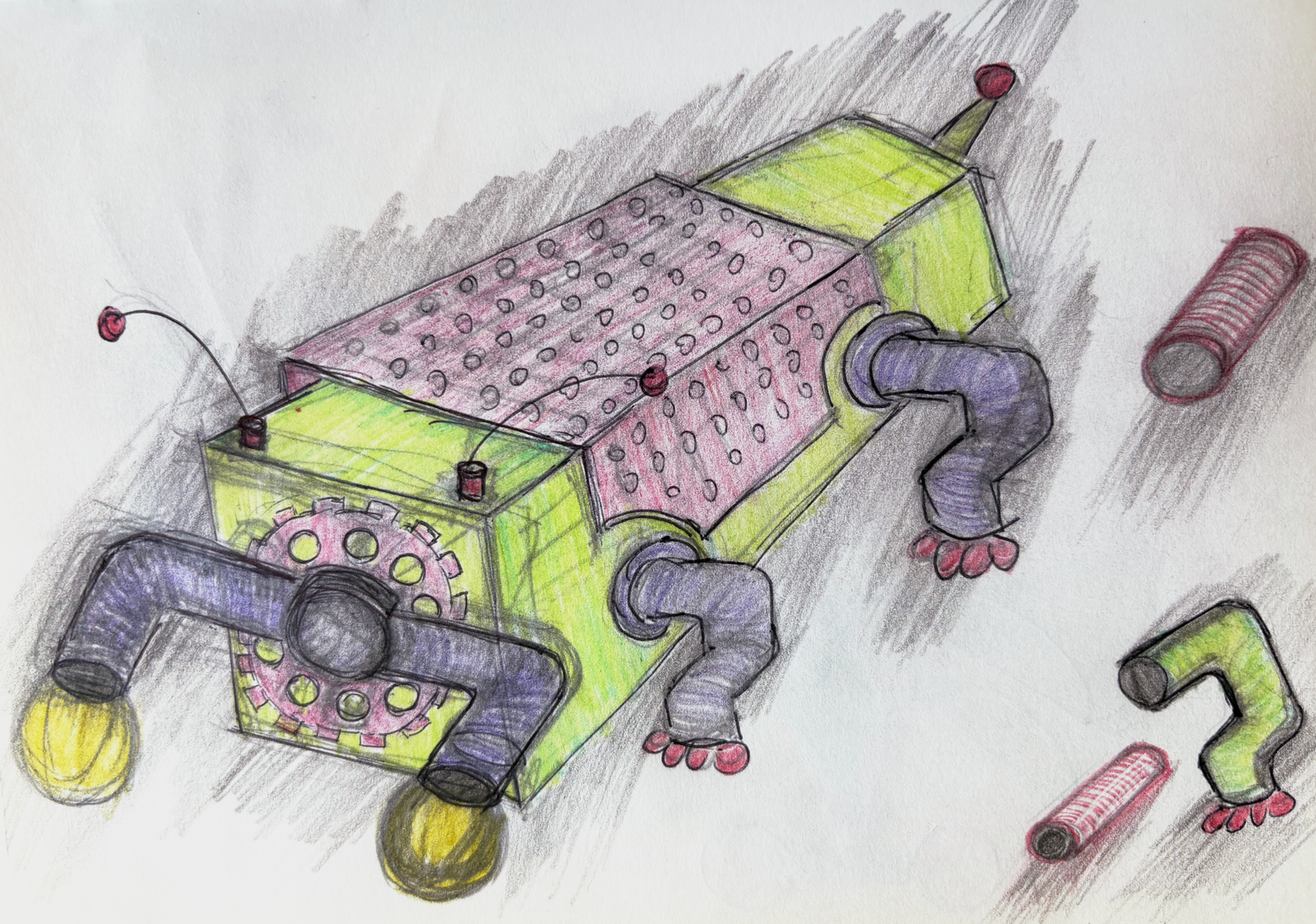
In recent years, I have developed several distinct bodies of work. Following Industrial Organs, the subsequent series—New Industrial Revolution, Artificial Intelligence, and Mars Colonization—each explored unique concepts yet remained interconnected, each iteration building upon the ideas of its predecessor. These works collectively form a narrative, akin to chapters in an unfolding story. I employ steampunk aesthetics to evoke the gritty allure of industrialization, infusing each piece with a sense of mechanical nostalgia. The creative process itself thrives on boundless imagination, and viewers often ask “Where do these ideas originated?” To answer, we must return to the beginning.
“These relics captivated me, igniting a flood of creative possibilities.”
My inspiration was sparked during a visit to a revitalized arts and cultural district, once a bustling industrial hub. While the area now pulses with modern energy, remnants of its past—rusting pipes, antique pressure gauges, and disused propellers—were deliberately preserved in quiet corners as historical echoes. These relics captivated me, igniting a flood of creative possibilities. At the time, I felt compelled to repurpose machine parts but lacked a clear vision until I rediscovered the organ molds from my graduate exhibition years prior.
It seemed wasteful to let these molds just gather dust, so I began weaving a narrative to unite machinery and human organs. Surrealism taught me that juxtaposing the strange and contradictory can birth new realities. What if internal organs functioned as mechanical systems? What if they could exist outside the body, whirring to life like autonomous engines ? Thus, Industrial Organs emerged, exhibited at the CCBC gallery as my first solo exhibition.
“Each series has been a stepping stone, exploring humanity’s dance with progress, machinery, and the unknown.”
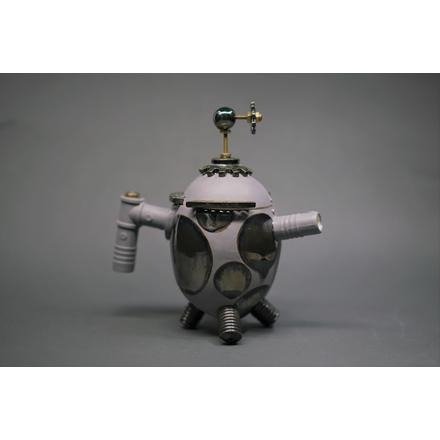
When I first started making steampunk style pieces, my initial plan was to source machine parts and assorted elements from flea markets or online. However, I soon realized it wasn’t as easy as I’d imagined . In fact it was nearly impossible to fine one match what I requested . To ensure my work achieved the perfect aesthetic , I began crafting the parts myself using clay.
To enhance the illusion, I apply metallic glaze to the clay-made machine parts, giving them the appearance of real metal. Each piece is brought to life through a combination of techniques – pinching, mold casting, and slab building – all used strategically to achieve the desired effect.
Another key difference from traditional sculpture is that most of my work are multi-part compositions. Since I often use glaze with varying firing temperature on a single piece, I fire each component separately and assemble them in the final stage.
When we imagine a steam powered machine, certain images come to mind : spinning cogwheels, turning gears and steam boiling from towering pipes. This is exactly the aesthetic I aim to capture in my steampunk style works. I design my piece with moveable elements, whether rotating attachments or interactive mechanism , to bring them closes to the true spirit of steampunk.
To achieve this , I incorporates bolts, screws, and adhesives to securely fasten components like cogwheels and propellers , while ensuring they on the clay body but still remain functional. The result is a dynamic fusion of sculpture and mechanics where each work not only looks like a machine sculpture but also embodies the motion and energy of a living machine
When we imagine a steam powered machine, certain images come to mind : spinning cogwheels, turning gears and steam boiling from towering pipes. This is exactly the aesthetic I aim to capture in my steampunk style works. I design my piece with moveable elements, whether rotating attachments or interactive mechanism , to bring them closes to the true spirit of steampunk.
To achieve this , I incorporates bolts, screws, and adhesives to securely fasten components like cogwheels and propellers , while ensuring they on the clay body but still remain functional. The result is a dynamic fusion of sculpture and mechanics where each work not only looks like a machine sculpture but also embodies the motion and energy of a living machine
“The most common questions people ask about my work is ‘Are they metal? Are they made of clay?’ Surprising, this curiosity has become one of the most interesting aspects of my creations.“
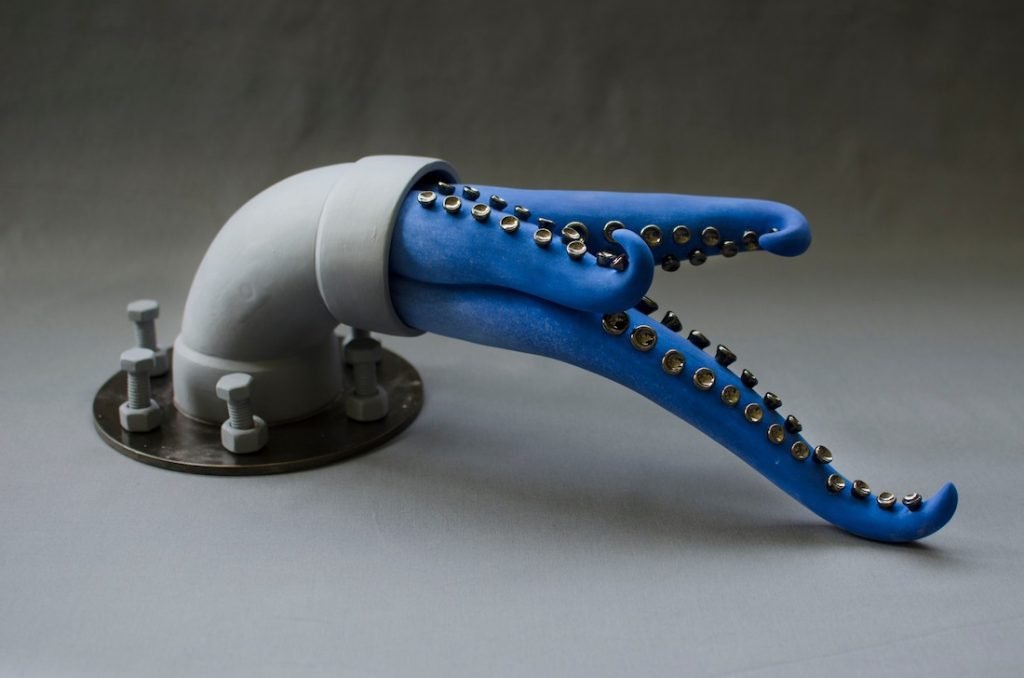
Initially, I hadn’t recognized the steampunk influence in my work until a friend pointed it out. The screws, cogwheels, and propellers I crafted echoed the steam machine, the foundation of the 18th-century’s First Industrial Revolution. This revelation inspired my next series, New Industrial Revolution, where I reimagined everyday objects, like the telephone, into fantastical designs divorced from their traditional forms. Artificial Intelligence followed, probing humanity’s evolving relationship with technology. Pieces in this collection depict AI infiltrating daily life and displacing human labor. One sculpture, “Plumber,” features an octopus-like AI tentacle bursting from a water pipe, a metaphor for machines usurping even the most tactile trades.
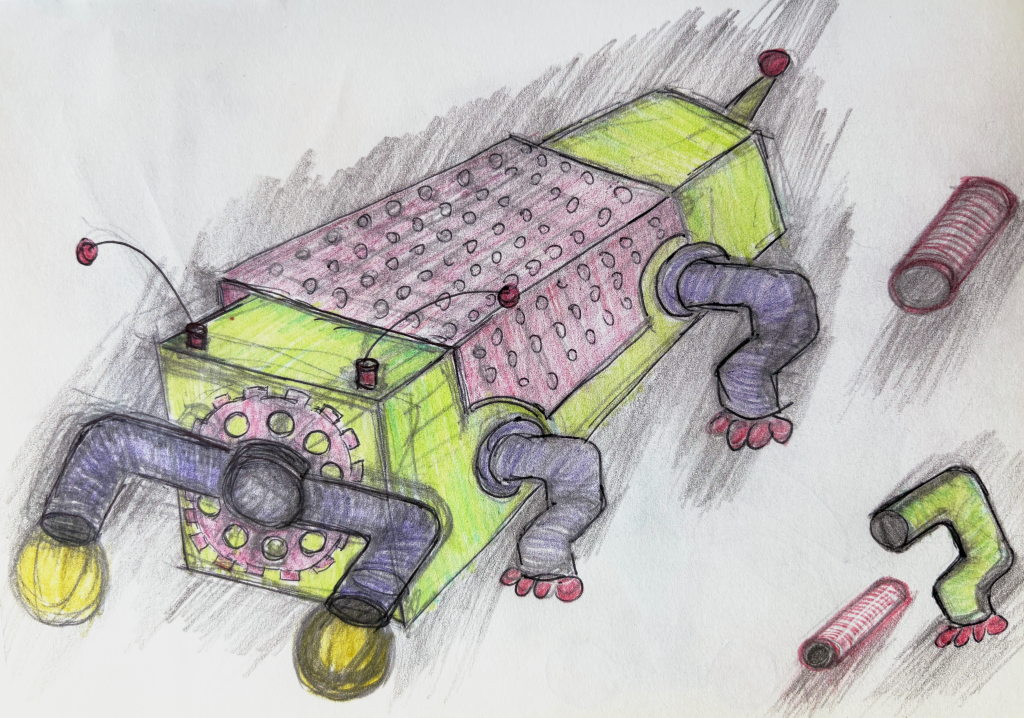
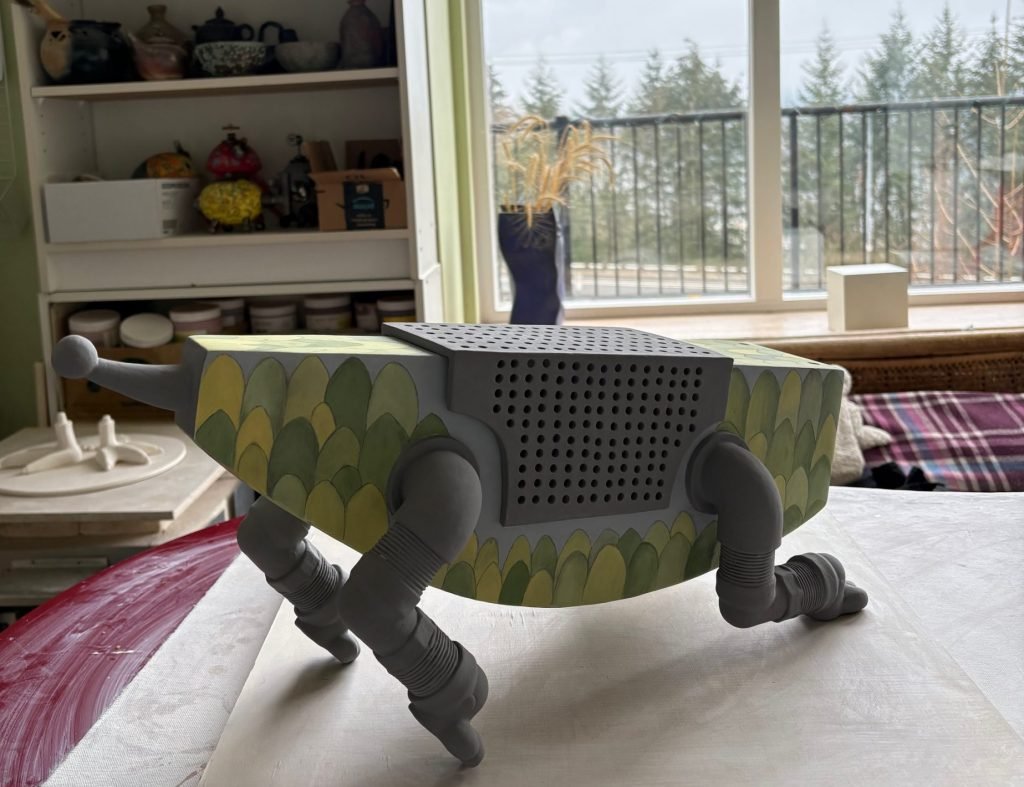
Last year’s Mars Colonization exhibition expanded this narrative into cosmic territory, envisioning a spacefaring future where AI entities journey to new worlds. Now, my current exhibition, Rebirth, envisions a new generation of AI lifeforms. These “lower class” creatures nod to evolution’s humble beginnings. Each series has been a stepping stone, exploring humanity’s dance with progress, machinery, and the unknown. Through steampunk’s retro-futuristic lens, I invite viewers to ponder: What worlds might we build—or unravel—next?
