Carly was born, raised, and still lives on the traditional territory of the Tsimshian people. She is grateful to the Kitselas and Kitsumkalum peoples. Her work is intrinsically intertwined with her identity and lived experiences growing up on the Northwest Coast of BC with her Metis, Finnish, and Scottish grandparents.
Could you tell us about your journey as an artist?
I come from a long line of Métis artists and fisher people and Finnish mushroom harvesters and cobblers. I grew up on baked bannock and watching my grannie Alice knit. I describe myself as a Métis Relational Maker*, creating material culture rather than making ‘art’ or ‘craft.’ I see each piece I create as an enactment of culture, a co-creation with kin, land, mentors, and Ancestors.
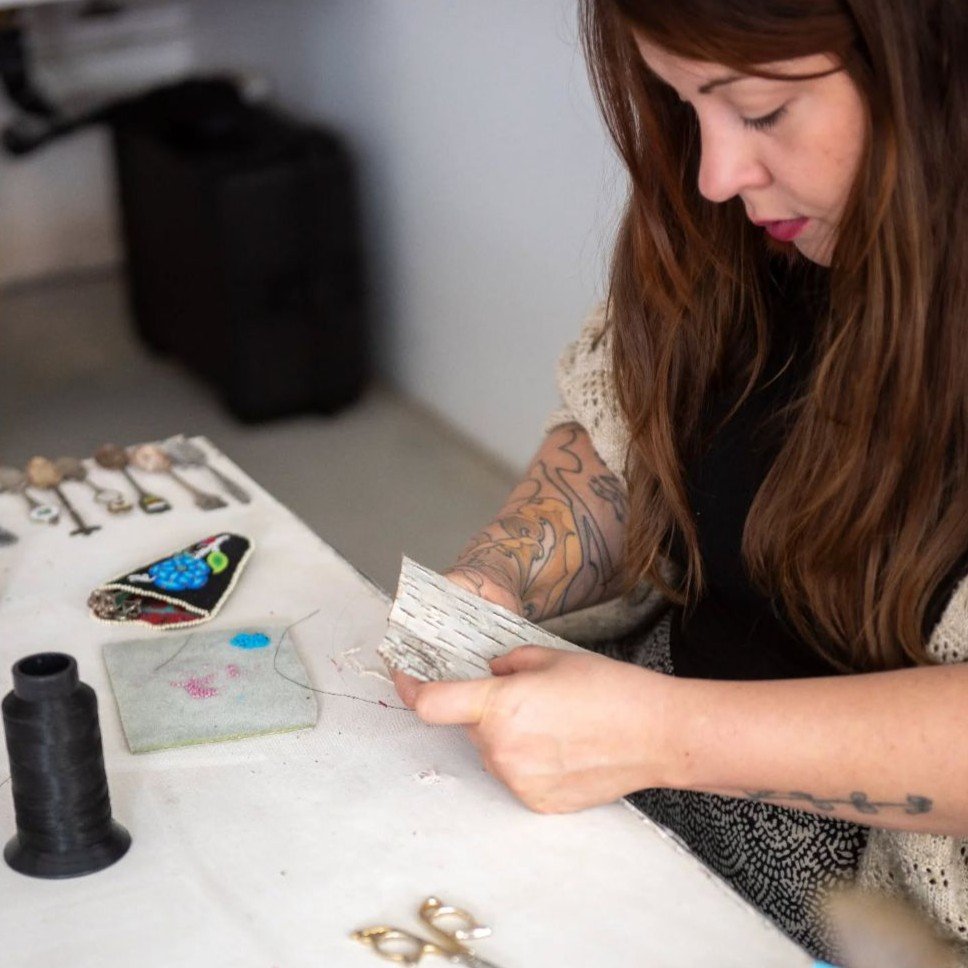
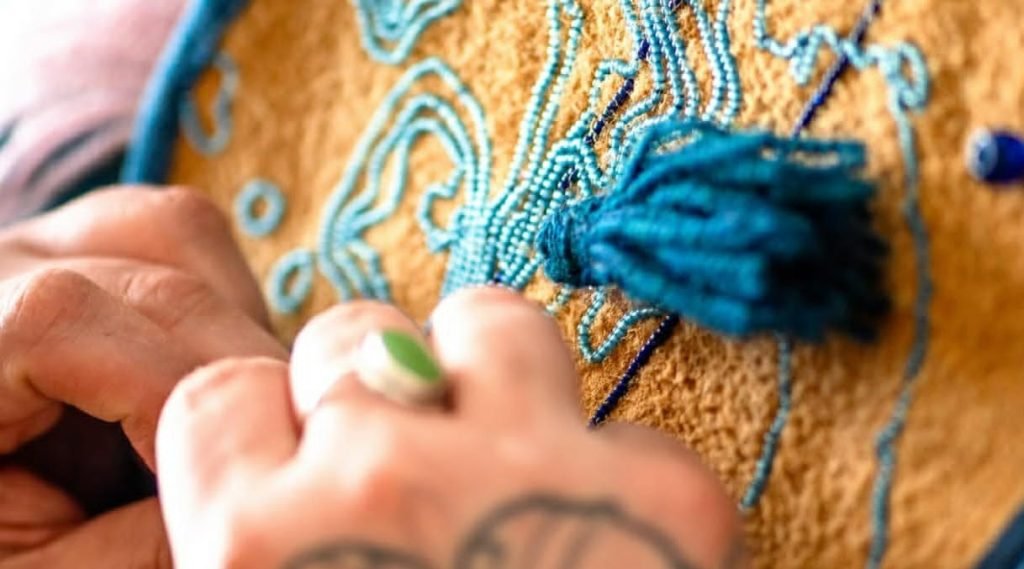
My Métis flatstitch beadwork is a collaboration between place, archival stories, and the hands that guide mine—sometimes even my pup Banjo. photo credit: Nicole Nabess
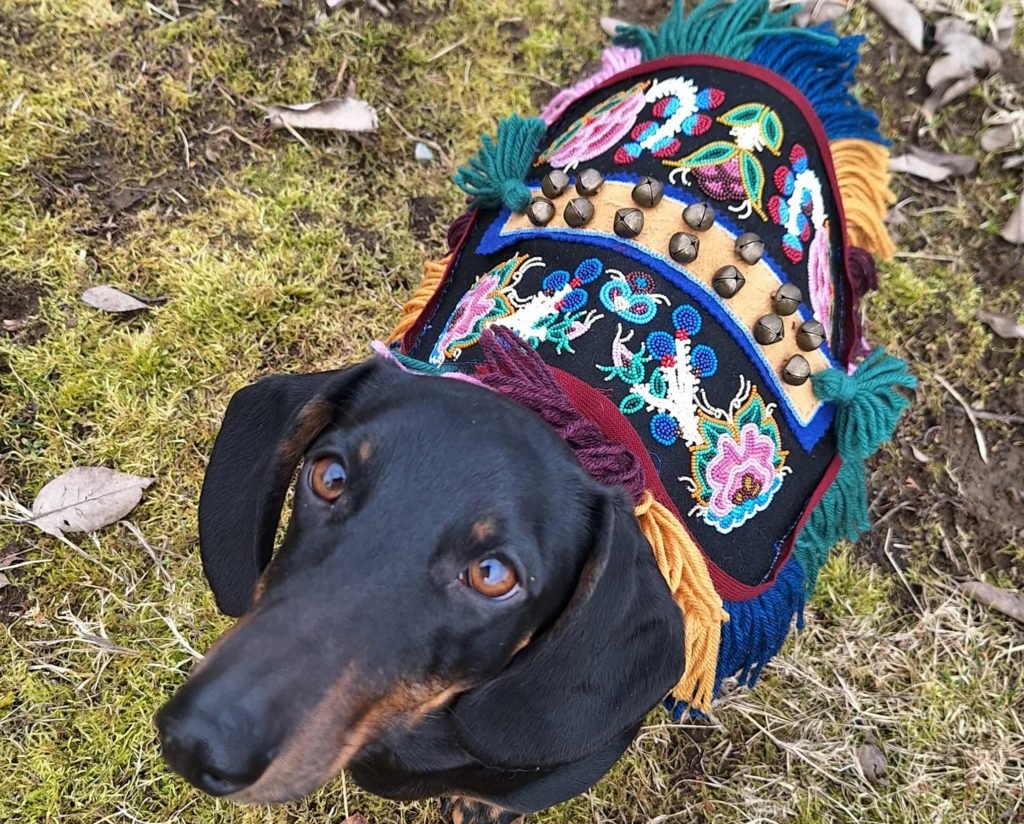
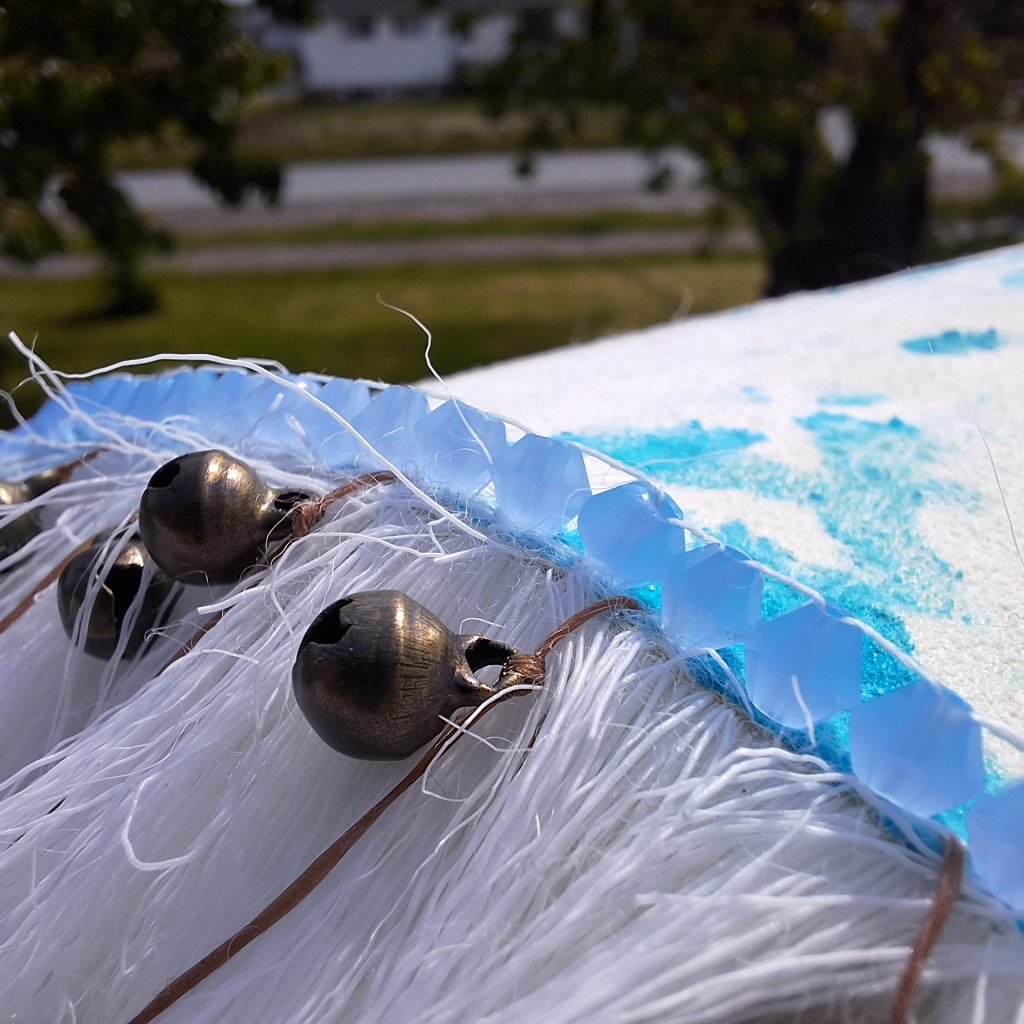
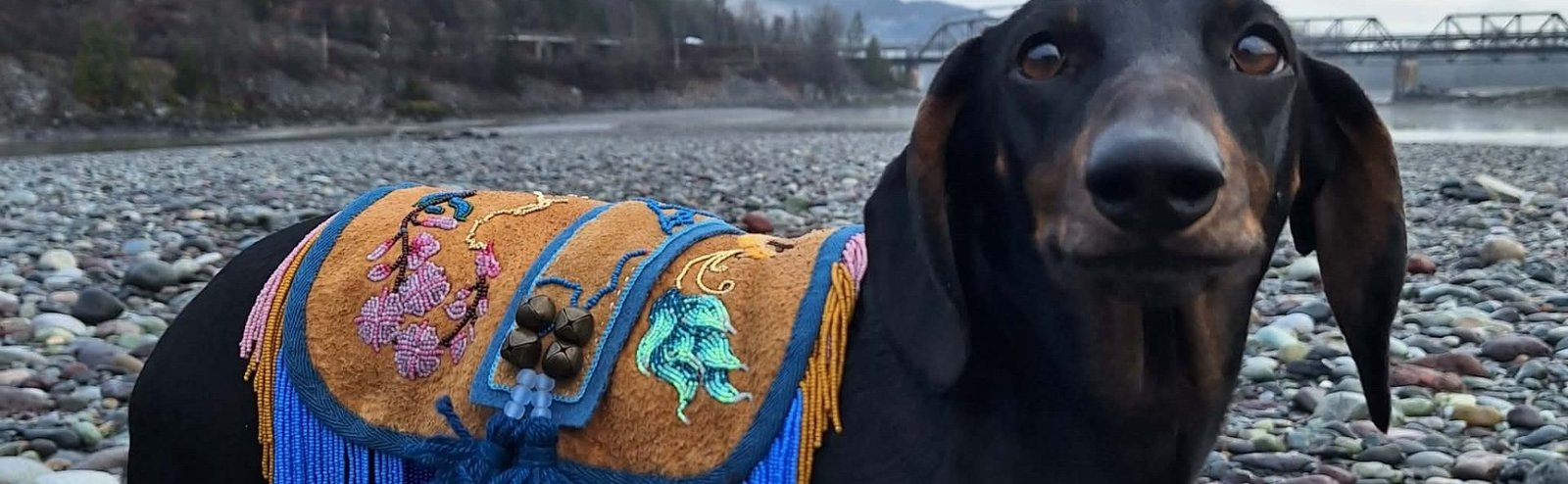
My current practice focuses on stitching tuppies (dog blankets) and relating to themes of reclamation, Indigenous joy as a form of resistance to colonial oppression, longing/nostalgia, intergenerational transmission of knowledge, love, and healing.My creative process is rooted in stitchwork, storytelling and memory.
One of my earliest memories is sitting on my Gramma Oliva Nabess’s bed as she opened her old wooden sewing case, revealing a rainbow of threads and buttons. That day she taught me to thread a needle and tie a knot, and I know she still guides my hands.
*Thank you, KC Adams, for the term Relational Maker.
photo credit: Carly Nabess, modelled by Banjo
How did art impact you as a child? What did it offer you beyond the creative process?
From as far back as I can remember, I’ve been drawing, painting, building, and dreaming. For me, dreaming and storytelling go hand in hand. I’ve always been drawn to using whatever medium I can find to tell a story or depict the images and feelings inside me. I remember biking down to the Copper River as a kid, sketchbook or journal in hand, filling the pages with hand-drawn comics, poetry, and sketches of the flowers and plants.
I have always been a maker. I remember drawing my pets, stitching felt puppets, building forts, making beaded and macramé bracelets, and sketching portraits of my family and animals. As a kid, I spent a lot of time in my own imagination, creating new worlds and dreaming up stories.
Looking back, I see now that making art was a form of safety and healing for me – a way to process and shape my experience through creativity. photo credit: Nicole Nabess
How do you hope your work effects the audience?
I hope my work evokes a sense of curiosity, joy, belonging, love, remembering, and resistance, and that these emotions help counteract the sense of loss and displacement felt by my kin.
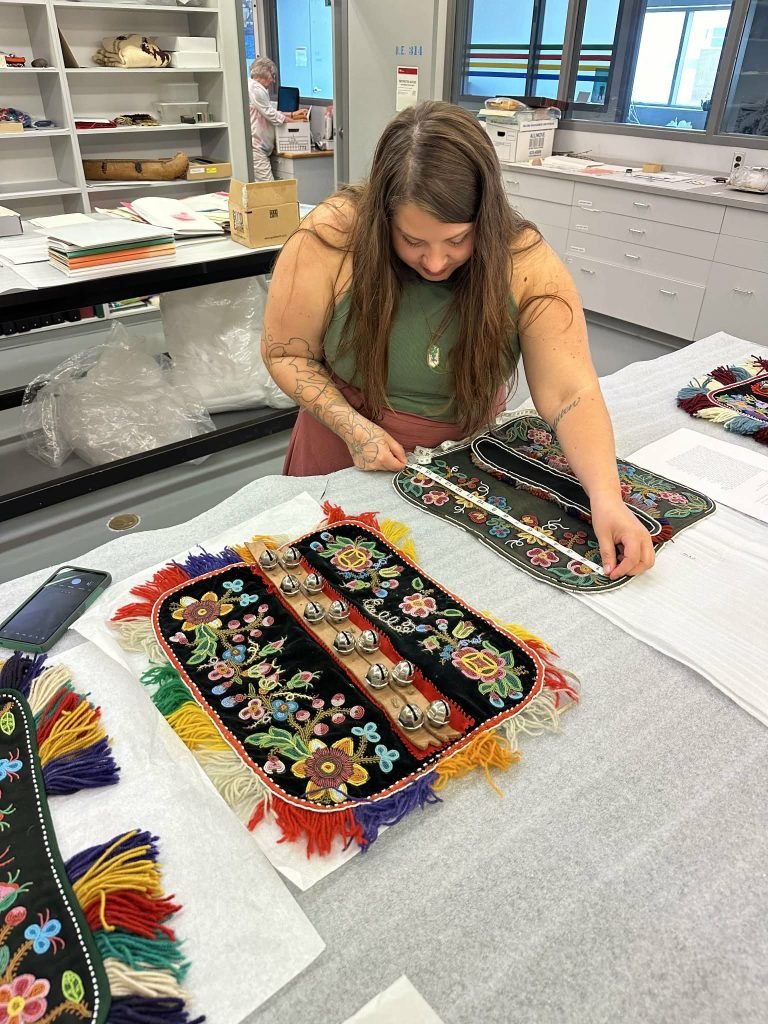
photo credit: Nicole Nabess
What other experiences do you hold close to you that has helped you on your creative path?
My time as an archival researcher with Kitsumkalum, harvesting alongside my Gramma Olive and her dog Lucy, fishing with my dad, and listening to Métis politics from Grandpa Andy have all shaped my creative practice.
I’ve also worked as the Arts and Culture Coordinator for the Métis Nation of British Columbia and the Amelia Douglas Institute. These roles have allowed me to immerse myself in the contemporary Métis arts world, while also helping to educate others and reclaim our traditional art forms and culture. This November, I will graduate with my Master of Fine Arts from Emily Carr University of Art and Design.