
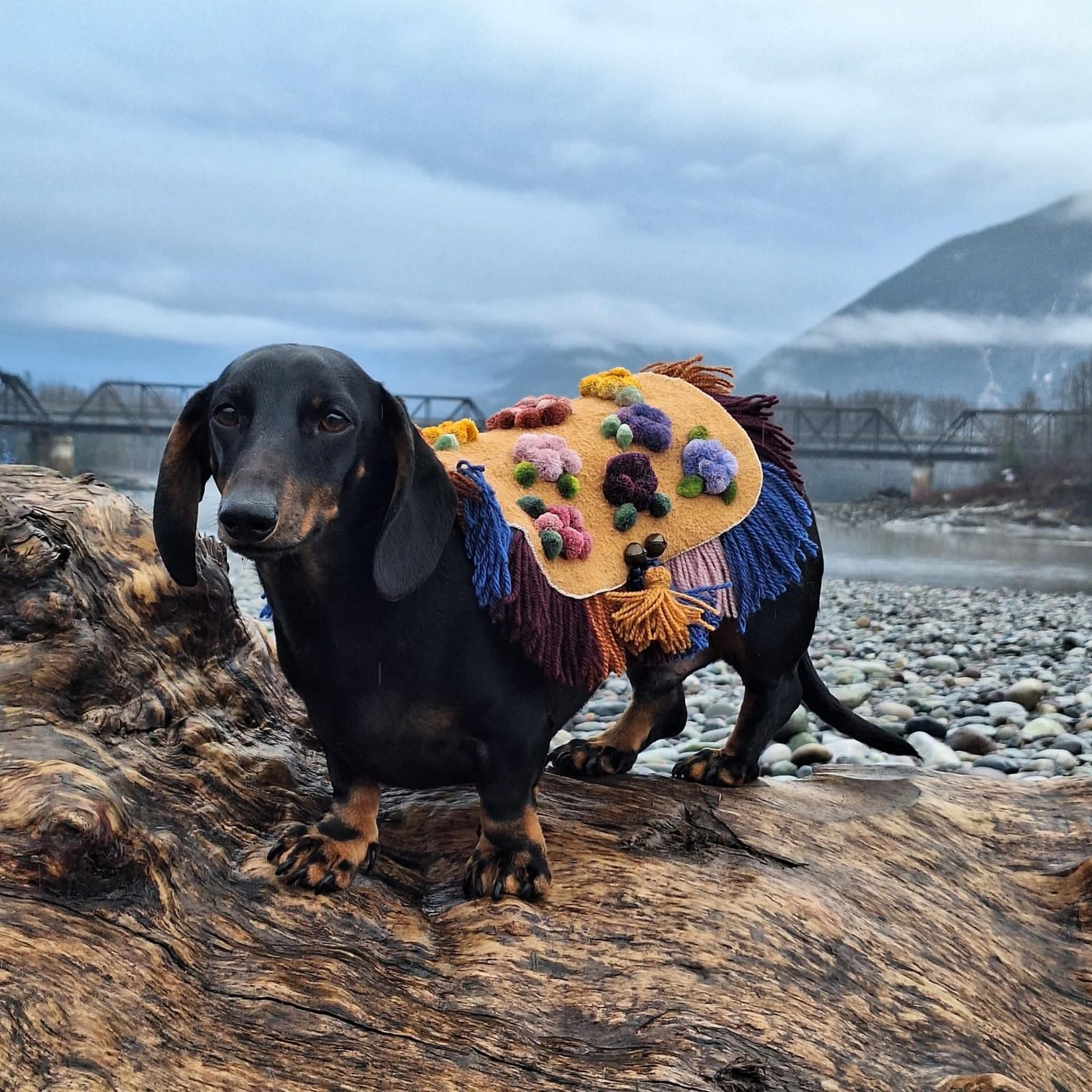
“Nabess excels in celebrating the tuppie tradition while bridging the gap between ancestral modes of creation and experimental craftsmanship.”
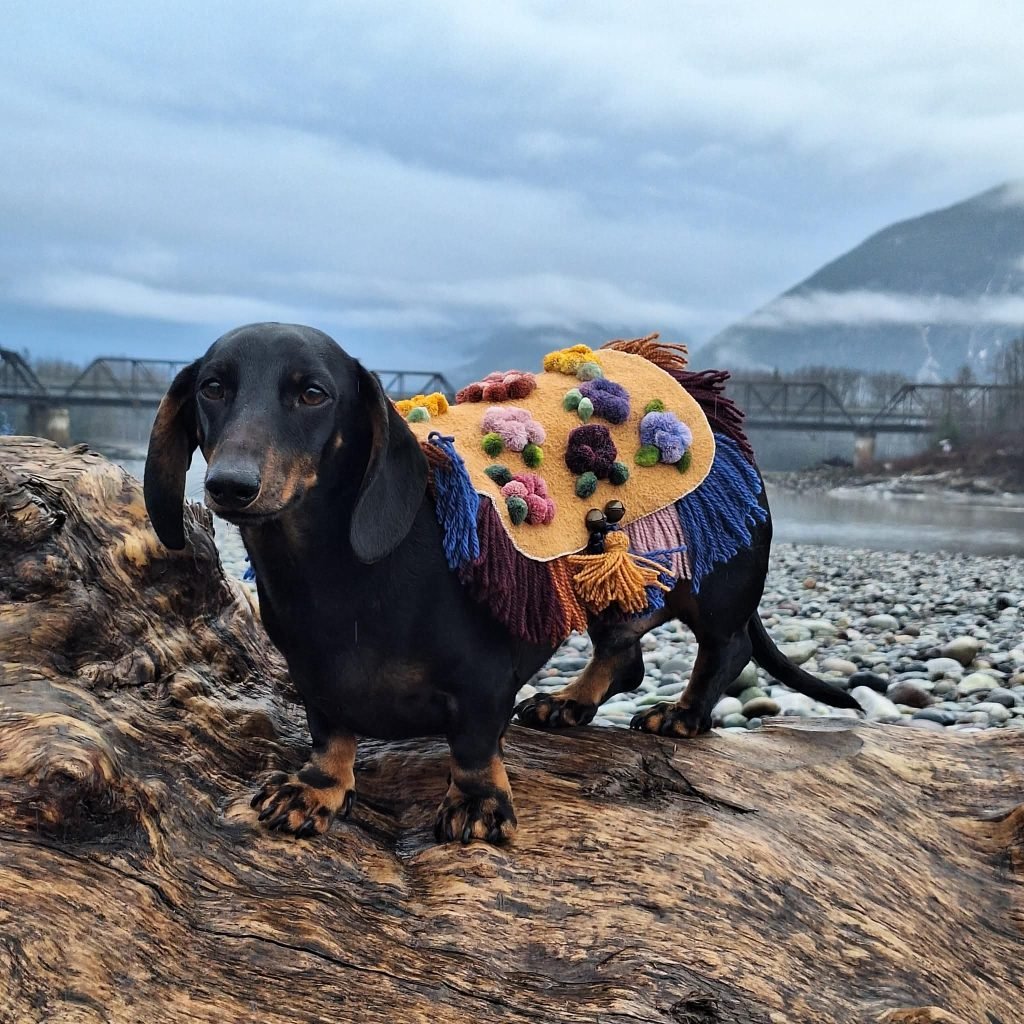
Finding home amoung the floral tuppies features 15 pieces by Carly Nabess, a Relational Maker who describes her interdisciplinary work as a “love letter” to her Métis kin. Her practice is defined by a collaborative process of archival activation, intergenerational knowledge sharing, and a close relationship with the land. This exhibition is centered around a series of seven tuppies, a type of embroidered dog blanket originating with Dene, Métis, and Cree makers on the Red River Settlement. Tuppies historically adorned sled dogs, with the jingling bells announcing their arrival at trading posts or other community centers. Nabess was first taught to create tuppies by Cynthia Boehm, who has remained a key mentor and collaborator on multiple works in this exhibition.
photo credit: carly nabess
In Nabess’ tuppies, she applies ancestral techniques including tufting and flat-stitch beadwork to anchor her innovative, contemporary practice in the archive, while allowing herself space to play and explore alternative pathways to storytelling.
The exhibition opens with “Stories Shared Amoung Cousins | Following in Gramma Olive’s footsteps – In Process,” a pair of deer hide mocassins embroidered with flowers representing Nabess’ grandmother. Though hidden from viewers, the moccasins feature a lining fashioned from Gramma Olive’s floral dishcloth; an tribute to her legacy and a material representation of Nabess’ ancestral co-creation. These moccasins poignantly illustrate the care in which Nabess approaches her visual practice, and the powerful thematic currents that connect each work.
photo credits: carly nabess
As viewers move through the exhibition, they will gravitate towards the gathering of tuppies in the center of the gallery, first exhibited as part of Nabess’ MFA thesis presentation in July 2026. All seven tuppies are arranged in a circle, protecting “mayshkotoonikayhk: Reciprocity with the Ancestors,” a ground-level installation of embroidered gauntlets and a miniature tuppie in a moment of exchange, laying atop vivid blue rabbit furs and a collection of stones from Vancouver, the Ksyen (Skeena) River, and Cormorant Lake. The tight circle of plinths surrounding this work creates a sacred space that resists open access; visitors may look from a distance, but the environment surrounding the piece remains sheltered.
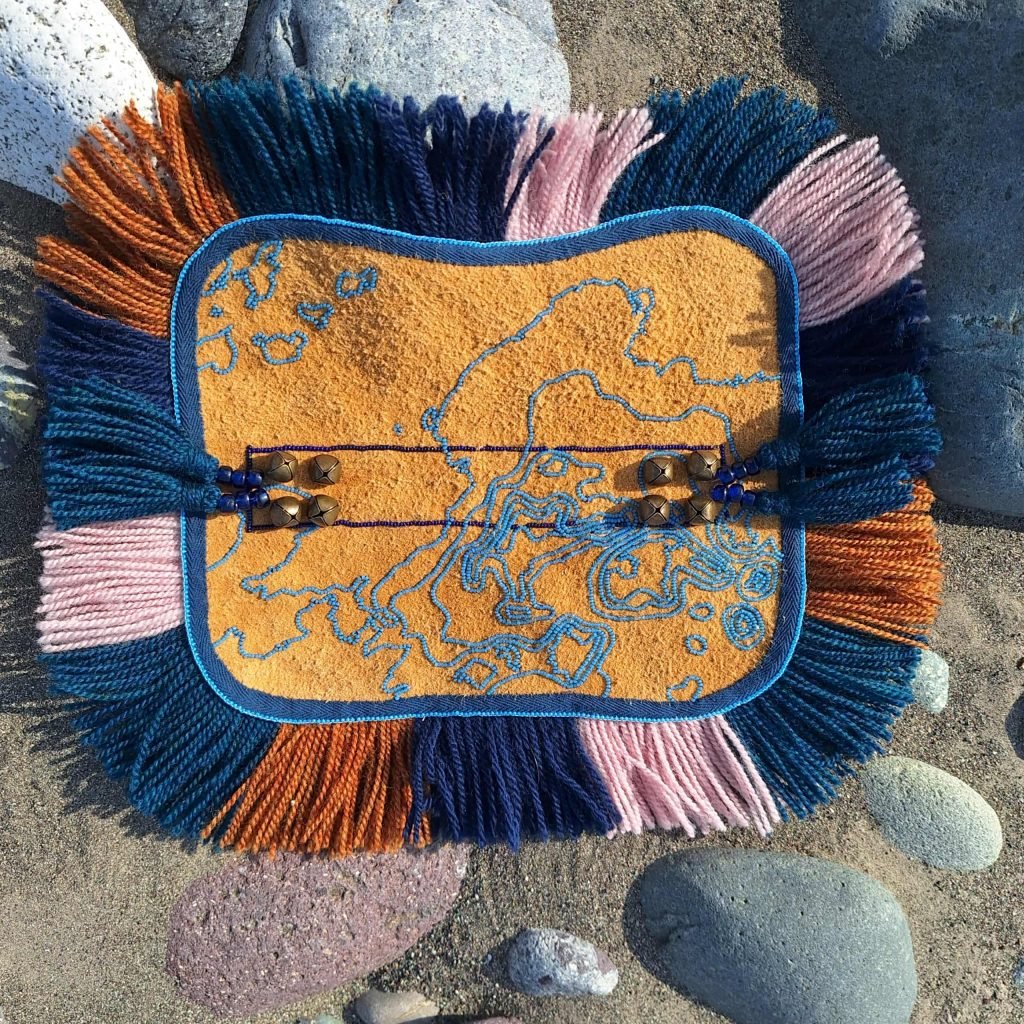
The collection of tuppies, including the aforementioned miniature, showcase the core values of Nabess’ collaborative practice while illustrating the maker’s growth as she moves from ancestral techniques to contemporary forms. “Tracing Memories Gifted To Me By Grandpa Andy” is one of Nabess’ three storytelling tuppies, created from deer and moose hide and embroidered with an array of blue glass beads. The beadwork traces the depths of Cormorant Lake using topographical language that mirrors navigational maps, an homage to an intimate knowledge of the water as well as the region where Nabess deepened her relationship with her Métis community and ancestral homeland.
photo credits: carly nabess
This tuppie also tells a story of discomfort and misplacement: While boating on the lake, Nabess was stranded on a small island for several hours due to a motor failure. When recounting this experience, Nabess asked, “what does it mean to be lost in a place that has only existed in gifted memories?” How is navigating a space further complicated when a land is inherited yet unfamiliar?
As a result of colonial conquest and mass displacement, many Indigenous people were forced to grow up estranged from their ancestral lands, deepening the hereditary disconnect already present due to forced assimilation and cultural erasure. Through the collaborative creation of visual culture, Nabess engages in a form of healing: she instills her contemporary experiences on Cormorant Lake, extending the tapestry of her community’s narrative and reconciling with her separation from the region.
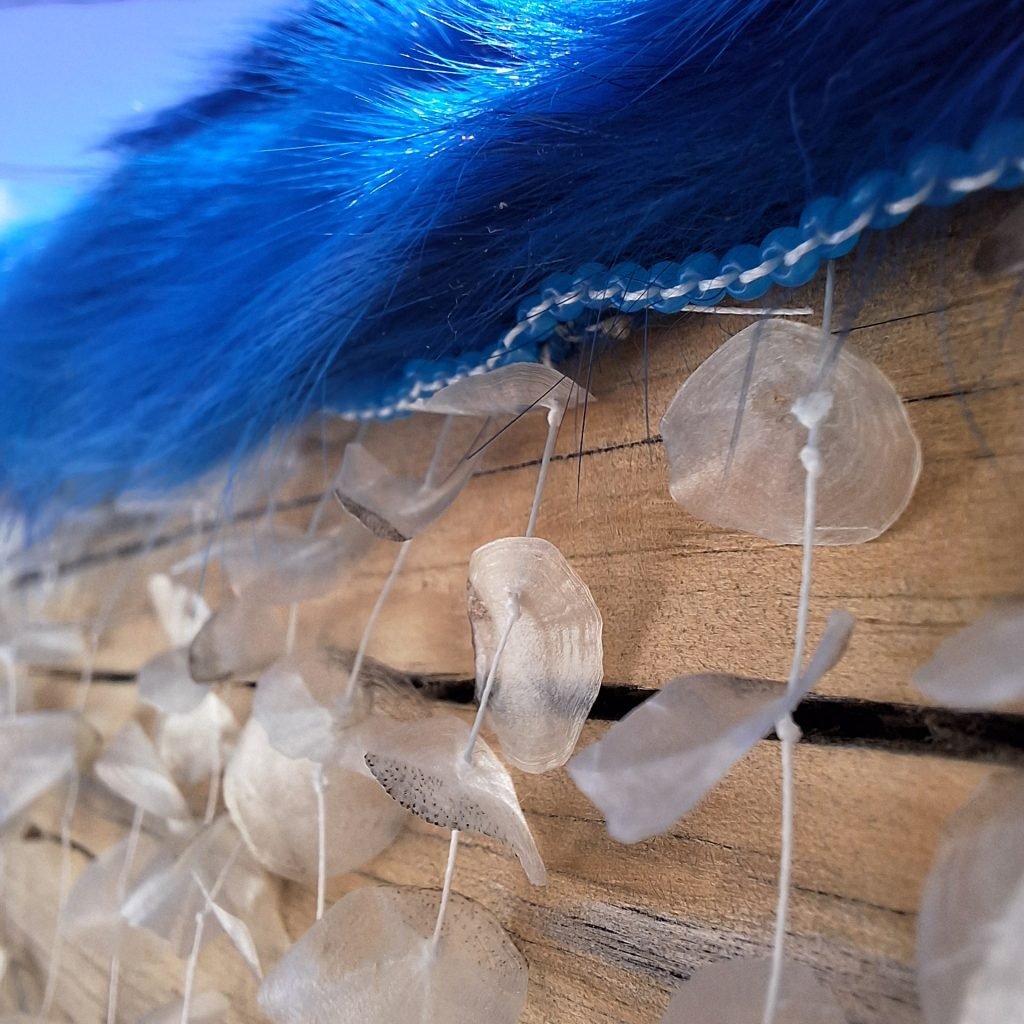
While several of Nabess’ tuppies feature familiar compositions, three pieces diverge completely, resulting in a trio of experimental fur tuppies that adopt a futurist aesthetic and expand traditional notions of form. “It Echoes through Our Bloodline | The Sounds of Our Grandfathers’ Stories” are two works created from reindeer fur, a material with Nordic roots that invites ancestral collaboration from Nabess’ Finnish grandfather.
photo credits: carly nabess
Through the use of the fur, Nabess forges a circumpolar relationship between northern cultures, who scholars such as Heather Igloliorte have noted share many cultural practices and sensibilities due to geographic similarities.
When read as a cohesive series, the collection of tuppies succeeds in investigating how the medium can be used to discuss shared past, present, and future. Nabess excels in celebrating the tuppie tradition while bridging the gap between ancestral modes of creation and experimental craftsmanship. Though her work is deeply embedded in archival practice and collaborative knowledge sharing, each piece feels fresh, complex, and distinctly contemporary, echoing Nabess’ interdisciplinary approach to relational making.
finding home amoung the floral tuppies will run from August 6 – September 24th, 2026 at the Craft Council of BC.
exhibition review: finding home amoung the floral tuppies written by Alena Russell
